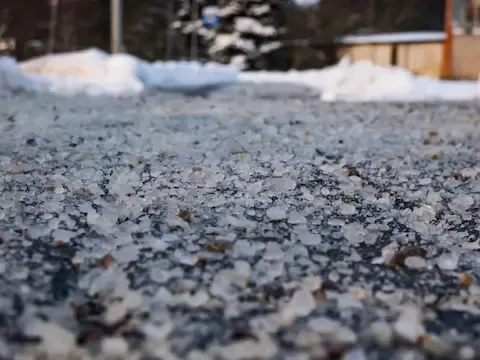
January Ice Melt Timing for Sioux City IA Properties
January in Sioux City is not forgiving. By the time the calendar flips to the new year, temperatures along the Missouri River corridor have already swung hard, and the pattern that follows is what makes ice management genuinely difficult: brief warm-ups that melt surface snow, followed by overnight drops that refreeze everything into a glassy sheet before sunrise. That freeze-thaw cycle is the main reason timing your ice melt applications matters as much as choosing the right product. Apply too early and you waste material. Apply too late and someone has already slipped on your walkway or driveway.
Why January Is the Hardest Month for Ice Control in Sioux City
Sioux City sits in a climate zone where January averages lows well below 10°F on some nights, yet daytime highs can briefly push above freezing during a southern air intrusion. That contrast creates a persistent problem. Snow that softens and compacts during the afternoon bonds to pavement as temperatures crash after sunset. By morning, you are dealing with a layer of bonded ice rather than loose snow, and that is significantly harder to remove mechanically.
The Missouri River valley also channels cold air efficiently during northwest wind events. What feels like a manageable temperature in the afternoon can drop ten to fifteen degrees in a matter of hours once a front moves through. Property owners who check weather apps once in the morning and do not revisit them are regularly caught off guard. January ice management in Sioux City demands a mid-day weather check habit, not just a morning one.
Pre-Storm Application: Getting Ahead of the Ice
The most effective ice control strategy in January is anti-icing, which means applying product before precipitation begins or before temperatures drop below freezing. A thin layer of ice melt laid down on dry or slightly damp pavement creates a brine barrier that prevents the bond between ice and the surface. That bond is what makes removal so labor-intensive after the fact.
For typical January conditions in Sioux City, pre-treating driveways and walkways three to four hours before a predicted storm or overnight freeze gives the product time to work into surface pores and sit ready. Calcium chloride and magnesium chloride are both solid choices for pre-storm application because they remain effective at temperatures far below what sodium chloride can handle. When overnight lows are forecast at single digits or colder, those two products outperform standard rock salt by a wide margin.
If you are managing a residential property, focus pre-treatment on the high-traffic zones: the apron at the base of the driveway, the front walk, any steps, and the path between the house and detached garage or street. These are the areas where a fall is most likely and where ice forms first because foot traffic compacts the snow.
Refresh Windows: When to Reapply During Extended Cold Snaps
January in Sioux City frequently delivers cold snaps that run three to five days without meaningful temperature recovery. During those stretches, a single application does not carry you through. Ice melt products dilute as they work, and once they have absorbed moisture and done their job, the residual brine concentration may not be enough to handle additional accumulation or refreezing.
A practical rule for extended cold snaps is to reassess surfaces every twenty-four hours. If you can see fresh ice formation or a dull white film on pavement that was clear the day before, it is time for a light reapplication. You do not need to apply at the original rate. A thin refresh coat on surfaces that already received product is typically enough to restore effectiveness. Over-applying does not speed up ice melt and contributes to the product washing off into soil and storm drains when temperatures eventually recover.
If your property has shaded areas, particularly north-facing sections of driveways or walkways under roof overhangs, treat those spots with more attention during refresh applications. Shaded pavement stays colder longer and is the last to clear naturally. These are also the spots where compacted ice from foot traffic creates the most persistent hazard.
Product Selection for January Cold in Sioux City
Not all ice melt products are rated for the same temperature range. Reading that label matters in January more than in November or December, when temperatures are more moderate. Here is a practical breakdown for Sioux City winter conditions:
- Calcium chloride works down to approximately -25°F and generates heat as it dissolves, making it the strongest option for extreme cold. It is more expensive but necessary during the coldest January nights.
- Magnesium chloride is effective to about -13°F and is considered less damaging to vegetation and concrete than calcium chloride when used properly. It is a reasonable choice for most January conditions.
- Sodium chloride (rock salt) loses effectiveness below 15°F and is largely wasted during the coldest nights Sioux City experiences in January. It is better suited to marginal freezing conditions.
- Blended products that combine multiple chloride compounds can offer a balance of cost and performance, but check the label for the effective temperature range before assuming they will perform in deep cold.
If you have concrete surfaces that are less than three years old, check with your contractor before applying calcium chloride repeatedly. Young concrete can be more susceptible to surface scaling. For guidance on matching product to surface type, the information in Which De-Icer Is Safest for your specific pavement covers that in detail.
Common Timing Mistakes Sioux City Property Owners Make in January
The most frequent mistake is reactive application only. Many homeowners apply ice melt after they can already see ice, which puts the product at a disadvantage. Bonded ice takes significantly longer to break loose than ice that was prevented from bonding in the first place.
The second common mistake is applying product during active snowfall without accounting for dilution. If snow is falling at a moderate rate, it can dilute and bury a surface application before the product has time to work. In that scenario, a light plow or shovel pass to remove fresh snow before applying product is a better sequence.
The third mistake is treating the entire property at the same rate. High-traffic zones need more attention than the middle of a wide driveway. Concentrating product where it matters most stretches your supply and reduces runoff.
When Professional De-Icing Makes Sense for Sioux City Properties
For property owners managing larger driveways, steep grades, or commercial access points, the volume and timing demands of January ice control often exceed what a single person can manage reliably. A professional De-Icing service brings the advantage of commercial-grade product and application equipment, plus monitoring that accounts for the mid-day weather shifts that catch many homeowners off guard.
Sioux City's January weather does not give much margin for error when a freeze follows a wet day. Having a reliable service already scheduled means surfaces are treated on the right timeline regardless of when in the day conditions change. For property owners with liability concerns, with elderly residents, or with high foot traffic, that consistency is worth the investment in the months when it matters most.
