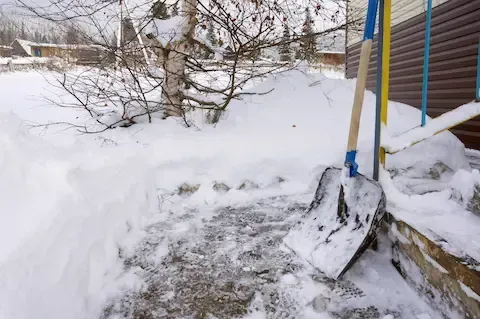
March Entrance Clearing After Sioux City Late Snows
March in Sioux City has a reputation for false starts. The calendar flips toward spring, the days stretch longer, and then a system rolls in off the plains and drops several inches of wet, heavy snow directly onto the entryways, front walks, and threshold areas you thought you were done managing for the season. These late-winter events are some of the most disruptive of the year because homeowners have often already mentally checked out of snow removal mode — gear is put away, attention has shifted elsewhere, and the entry areas may not be as prepared as they were in January.
Why Late-Season Sioux City Snowfall Is Different
The snow that arrives in late February and March behaves differently than the powder that fell in December. As temperatures hover closer to freezing and sometimes cross above it during the same weather event, the precipitation is often wetter and denser. A three-inch March snowfall in Sioux City can weigh significantly more than six inches of early-season fluff. That weight matters when you're clearing by hand, and it also matters for what happens to your entry surfaces when that snow sits even briefly.
Wet snow compacts fast under foot traffic. What might have been easy to push aside with a first pass becomes a bonded layer within hours, especially once overnight temperatures drop back below freezing. Entry areas — the threshold itself, any covered stoop, side steps, and the first several feet of walk — are where this matters most because that's where you and your household are moving in and out multiple times a day.
Refresh Your Entry Area Before the Next System Arrives
If you've had accumulation through February, there's a reasonable chance your entry zone already has some compacted material at the edges, possibly a strip of ice under the mat, or low spots where melt has refrozen. Before the next late snow hits, walk your threshold area deliberately and address what's already there. Chip away any residual bonded ice, check that your door mat isn't frozen in place, and clear any buildup against the threshold seal itself.
This kind of reset takes twenty minutes but it matters substantially for how well your entry responds to the next event. A clean, dry threshold clears more efficiently and drains more predictably than one that starts the storm already compromised. For anyone managing Entrance Snow Clearing on their own through the end of winter, this pre-storm reset habit is one of the most effective things you can do.
Melt Timing Considerations in March
Sioux City's late-winter weather window creates a specific dynamic with ice melt products. Daytime highs in March can range from the mid-twenties to the low forties within the same week. This means the product you apply needs to work across a wider temperature range than a standard winter application. Standard rock salt becomes less effective below 20°F, which is still a realistic overnight temperature in Sioux City through most of March.
Consider keeping a calcium chloride or magnesium chloride blend on hand for the late season rather than relying solely on the rock salt you may have used through winter. These options activate at lower temperatures and produce more heat on contact, which matters when you're clearing before 7 a.m. and the thermometer hasn't moved yet. Apply before the event when possible — a light pre-treatment on steps and the top of the threshold prevents the initial bonding that makes post-storm clearing harder.
One caution worth noting: March melt and refreeze cycles can be faster and more pronounced than midwinter. You may clear an entry cleanly at noon and find it refrozen by four in the afternoon as the sun drops. Build a quick check into your early evening routine on days after a storm to catch that refreeze before morning foot traffic turns it into a hazard.
Threshold Drainage and Entry Surface Prep
One of the most overlooked aspects of late-season entry management is what happens to meltwater at and around your threshold. As temperatures climb and melt accelerates, the water has to go somewhere. If your entry slopes slightly toward the door rather than away, that water pools at the threshold seal and then refreezes when temperatures drop again. Over time this can also work its way under door sweeps and cause swelling or seal damage.
Check the drainage slope of your entry area now before the last snows hit. If water pools toward your door, a simple rubber threshold dam or adjustment to your entry mat placement can redirect flow. Make sure any drain grates near the bottom of entry steps aren't blocked by accumulated debris or ice. These small fixes prevent the cycle of melt, pool, and refreeze that makes March entry areas particularly difficult to keep clear.
Common Mistakes Homeowners Make in Late Winter
The biggest mistake in late-winter entry clearing is treating it like a low-priority task because spring feels close. March storms in Sioux City and the broader Woodbury County area have caused as many slip-and-fall incidents as any midwinter event, often because the expectations and preparation levels are lower. Treat each late-season event with the same intentional approach you used in peak winter.
A second mistake is storing or running out of ice melt product without replacing it, assuming the season is over. Keep a backup supply on hand through mid-April. Northwest Iowa can and does see meaningful snow accumulation well into the final weeks of the meteorological winter transition, and running out of product mid-storm is entirely avoidable.
A third mistake involves timing: waiting until a storm is fully over to begin clearing. With heavy wet March snow, clearing in passes during the event keeps accumulation manageable and prevents the dense compaction that makes post-storm cleanup so labor-intensive.
Building an End-of-Season Entry Routine
Once Sioux City's last reasonable snow risk passes — typically mid-April, though late events are not unheard of — your entry area deserves a proper end-of-season reset. Remove accumulated sand or melt product residue, inspect for any surface cracking that formed from freeze-thaw cycling, and check the condition of threshold seals and door sweeps before the warm months. For more detail on the specific techniques for managing your front entry during winter, the guide on How to Clear Front Door covers the fundamentals that apply throughout the season.
Late winter snow in Sioux City is a known quantity. The conditions are predictable even if the timing isn't. Keeping your entry area clean, draining correctly, and stocked with the right products through the end of March means you're managing that risk instead of reacting to it after a fall or a frozen threshold has already created a problem.
