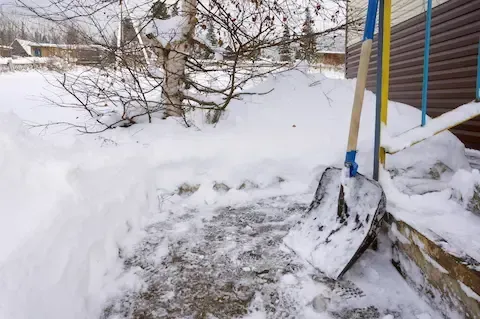
Front Steps and Porch Snow Removal in Sioux City IA
When a Siouxland winter hits overnight, the first battle of the morning happens right outside your door. Front steps and porch surfaces collect snow and ice faster than driveways because they're sheltered from wind drying, shaded from direct sun, and often constructed from materials that hold moisture tightly. A single missed clearing session can turn a three-step brick entrance into a serious slip hazard before most families have poured their first cup of coffee. Understanding the right sequence, the right products, and the right preparation makes that daily winter chore faster and genuinely safer.
Why Front Steps Ice Up Faster Than the Rest of Your Property
Steps and covered porches create microclimates that work against you. When temperatures hover near the freezing point and snow begins to melt slightly from foot traffic or daytime warmth, that meltwater runs downward and collects in the grooves and edges of each step. Once nighttime temperatures drop — which happens frequently in northwest Iowa — that trapped water refreezes as a transparent glaze across the entire tread surface. Wood decking expands and contracts with freeze-thaw cycles, creating small gaps where moisture sits. Concrete and brick develop hairline surface pores over years of use that hold just enough water to produce a black-ice-like coating by morning. Covered porches compound the problem because precipitation that would normally sublimate in open air stays moist longer under an overhang.
The Right Order for Clearing Entryway Snow
Sequence matters more than people realize when working a small, multi-level surface like a porch and steps. Clearing in the wrong order pushes snow onto surfaces you've already treated and forces you to work twice as hard.
- Start at the top of the steps and work downward. Pushing snow off the top tread first means it falls onto untreated lower treads, which you'll clear next. Working bottom-to-top buries your cleared work under the avalanche from above.
- Clear the porch deck before the steps. Sweep or shovel the horizontal deck surface first, moving snow off to the sides rather than toward the steps. Once the porch is clear, work each step individually from top to bottom.
- Use a flat pusher or small plastic shovel for tight tread surfaces. Metal blades on concrete and brick steps can chip the surface edge over time, especially when frost weakens the material. A plastic or rubber-edged blade protects both the step and your shovel.
- Remove snow all the way to the edge of each tread. Leaving a thin snow border along the step nosing — the leading edge where your foot lands — is where most falls happen. Clear it completely.
Choosing the Right Ice Melt Product for Sioux City Conditions
Sioux City sits far enough north that temperatures regularly drop well below 20 degrees Fahrenheit during January and February. That matters because not all ice melt products work equally across temperature ranges, and some cause serious surface damage when used on older concrete or natural stone.
Calcium chloride performs well at the lowest temperatures — down to negative 25 degrees — and generates its own heat as it dissolves, making it effective even in extreme cold snaps. It's a strong choice for metal-edged steps or pressure-treated wood decks, but use it sparingly because overuse can accelerate concrete surface spalling. Magnesium chloride is gentler on concrete surfaces and safer around pets and vegetation, though it loses effectiveness below about 5 degrees Fahrenheit. For a porch with decorative concrete, brick pavers, or natural flagstone, magnesium chloride is generally the better long-term choice. Avoid plain rock salt on brick or natural stone — it draws moisture into the material and worsens freeze-thaw surface damage over time.
Apply melt product after shoveling, not before. Pre-treating the bare surface with a light application before an incoming storm can help reduce bonding, but dumping product on top of accumulated snow mostly just wastes product and delays results. A thin, even spread on a cleared surface activates quickly and does the actual work of breaking the ice-surface bond.
Grip Mats and Traction Aids Staged by Your Door
Even a perfectly shoveled and treated entryway benefits from physical traction aids. Grip mats designed for exterior winter use — typically made from rubber or recycled materials with deep drainage channels — serve two functions. They provide immediate foot traction in the seconds after someone steps onto the porch, and they catch tracked snow and slush before it's carried inside to create interior slip hazards.
Staging matters as much as buying the right mat. The most useful placement is one mat at the bottom of the steps landing zone, and a second mat at the threshold of your front door. Avoid foam-backed or indoor-outdoor rugs, which soak up moisture, freeze solid overnight, and create trip hazards. Look for mats with scraper ridges that can be lifted easily for cleaning. Store a second pair of mats indoors during severe weather so you can swap in a dry set each morning rather than fighting with frozen, soaked ones.
A small handled brush hung near the door also pays for itself by the third storm — knocking loose snow off footwear before stepping inside prevents tracked meltwater from pooling near the entryway and refreezing under the door mat overnight.
What Sioux City Homeowners Often Get Wrong
One of the most common mistakes is waiting until the snow stops to start clearing. On a day when Siouxland receives four to six inches over several hours, waiting for the storm to finish means the bottom two inches have been compacted by foot traffic and partially refrozen by the time you start. Clearing in passes during an active storm — especially on steps — keeps each pass manageable and prevents that compacted base layer from forming.
Another frequent misstep is over-applying ice melt as a substitute for shoveling. Ice melt is a finishing product, not a snow removal tool. Piling it on top of several inches of snow accomplishes very little and leaves behind corrosive residue that damages wood and concrete over multiple seasons. The Entrance Snow Clearing for Homeowners guide covers additional strategies for managing your full entryway zone, including handrails and landing pads.
Homeowners with mobility considerations or steep front steps should also assess whether their current setup creates unnecessary risk. Handrails on both sides of the steps, adequate lighting for pre-dawn clearing, and non-slip tread strips bonded directly to older concrete step surfaces are all practical investments before the season starts rather than after an injury occurs.
When to Call for Professional Help
There are winter mornings in Sioux City when the overnight accumulation, the ice glaze beneath it, and a 6 a.m. departure time simply don't line up with a manageable DIY situation. Steep steps, elevated decks, or physical limitations make entryway snow removal genuinely hazardous for some households. Entrance Snow Clearing services handle exactly this situation — professional clearing timed before your morning departure, with the right equipment and products for each surface type, so the first thing you encounter when you open the door is a safe, clear path rather than a guessing game on ice.
The goal through every Siouxland winter storm is the same: an entryway that's cleared, treated, and ready before the first person walks out that door. Getting the sequence right, matching your product to your surface type, and having grip mats staged and ready turns a stressful daily chore into a reliable routine you can count on regardless of what the overnight forecast delivers.
