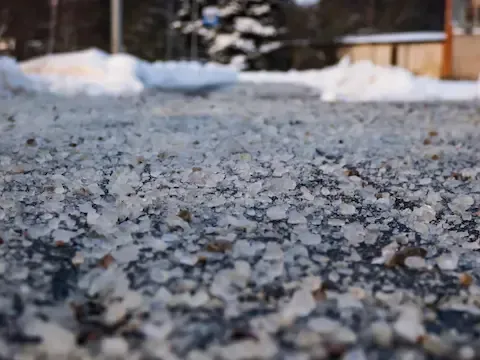
Loess Soil Effects of De-Icing Salt in Sioux City IA
Loess soil dominates the landscape around Sioux City, Iowa, creating unique challenges when winter de-icing salt interacts with this fine-grained sediment. Understanding how road salt affects your property's soil chemistry becomes crucial for maintaining healthy lawns and landscapes through Iowa's harsh winter months and into spring recovery.
Understanding Loess Soil Composition in Sioux City
The Loess Hills region surrounding Sioux City features soil formed from wind-deposited silt particles dating back thousands of years. This soil type contains high concentrations of calcium carbonate and maintains excellent drainage properties when undisturbed. However, loess soil's fine particle structure makes it particularly susceptible to chemical changes from external sources like de-icing compounds.
Sodium chloride, the primary component in most road salts, dissolves readily in snowmelt and penetrates loess soil rapidly. The soil's natural pH buffering capacity can become overwhelmed when exposed to repeated salt applications throughout winter months. Local soil testing in the Sioux City area reveals that properties within 50 feet of treated roadways show elevated sodium levels by late winter.
The clay content within loess soil creates additional complications. Salt ions bind to clay particles, altering soil structure and reducing the soil's ability to hold essential nutrients. This binding effect can persist well into the growing season, affecting plant root development and water uptake capacity.
Chemical Reactions and Soil Structure Changes
When de-icing salt contacts loess soil, several chemical processes begin immediately. Sodium ions displace calcium and magnesium from soil particles, disrupting the natural mineral balance that supports plant growth. This ion exchange process continues as long as salt remains present in the soil system.
The displacement of calcium particularly impacts loess soil because calcium helps maintain soil aggregation. Without adequate calcium, soil particles become dispersed, reducing pore space and limiting air and water movement. This compaction effect becomes pronounced in high-traffic areas where salt application rates are heaviest.
Chloride ions present different challenges. While plants require small amounts of chloride, excessive concentrations become toxic to root systems. De-Icing salt applications often exceed plant tolerance levels, particularly in areas where salt accumulates due to snow piling or runoff concentration.
pH changes occur gradually but persistently. Loess soil typically maintains a slightly alkaline pH around 7.5 to 8.0. Repeated salt exposure can push pH levels higher, reducing the availability of iron, manganese, and other micronutrients essential for plant health.
Seasonal Impact Patterns on Local Landscapes
Winter salt damage to loess soil follows predictable patterns in the Sioux City area. Early winter applications often show minimal immediate effects because frozen soil limits salt penetration. However, freeze-thaw cycles throughout winter gradually work salt deeper into the soil profile.
Spring presents the most visible damage as snowmelt carries concentrated salt solutions throughout the landscape. Areas near sidewalks, driveways, and street edges show the first signs of stress. Grass exhibits yellowing, browning, or complete die-off in affected zones. Trees and shrubs may show delayed leaf emergence or stunted growth patterns.
Summer recovery depends largely on rainfall patterns and soil management practices. Adequate precipitation can help leach excess salts from the root zone, but Sioux City's variable summer rainfall makes natural recovery unpredictable. Irrigation becomes necessary in dry years to flush accumulated salts below the active root zone.
Fall soil preparation becomes critical for properties with known salt exposure. De-Icing Strategies for Homeowners should include soil testing and amendment applications to restore proper mineral balance before winter arrives again.
Prevention and Mitigation Strategies
Protecting loess soil from salt damage requires proactive measures throughout the year. Installing physical barriers like burlap screens or plastic sheeting can redirect salt spray away from sensitive landscape areas. These barriers work particularly well for protecting foundation plantings and valuable ornamental plants.
Alternative de-icing materials offer reduced soil impact while maintaining safety standards. Calcium chloride and magnesium chloride products cost more initially but cause less long-term soil damage. Sand mixed with minimal salt provides traction while reducing chemical inputs to surrounding soil areas.
Soil amendment programs help buffer against salt damage. Adding organic matter like compost improves soil structure and increases the soil's capacity to hold beneficial nutrients. Gypsum applications can help displace excess sodium while adding beneficial calcium to the soil system.
Strategic plant selection for salt-exposed areas reduces replacement costs and maintenance requirements. Native Iowa plants like buffalo grass, little bluestem, and eastern red cedar show greater tolerance to salt exposure than traditional turf species.
Professional Assessment and Soil Testing
Annual soil testing provides the foundation for effective salt damage management in Sioux City properties. Professional testing should measure sodium levels, electrical conductivity, and pH changes to track salt accumulation over time. Testing in early spring reveals winter damage while fall testing guides amendment strategies.
Professional lawn care services understand loess soil characteristics and can develop targeted treatment plans for salt-affected areas. These services often include specialized equipment for deep watering and soil modification that homeowners cannot easily access.
Drainage improvements may become necessary for properties with persistent salt problems. French drains or surface grading changes can redirect runoff away from sensitive landscape areas while ensuring proper soil water movement throughout the growing season.
