Pre-Winter Lawn Prep for Sioux City Iowa Properties
Sioux City winters don't ease in gradually. When a November arctic front rolls down from the Dakotas, temperatures can plunge hard and fast, leaving turf that wasn't properly prepared exposed to serious damage. The good news is that the weeks between mid-September and the first hard freeze are exactly the right window to give your lawn what it needs to survive dormancy and emerge strong in spring. Knowing what to do — and when to do it — makes the difference between a lawn that bounces back in April and one that needs patching all summer long.
Why Pre-Winter Lawn Prep Matters in Sioux City's Climate
Sioux City sits in USDA Hardiness Zone 5b, which means cold snaps arrive earlier than homeowners in more temperate states expect. The Missouri River corridor adds humidity that can linger in thatch and soil, creating conditions where frozen moisture damages grass crowns if the turf isn't hardened off properly. Cool-season grasses like Kentucky bluegrass, tall fescue, and perennial ryegrass — the most common turf types in the area — have a narrow but critical fall growth window. Taking advantage of that window is the foundation of pre-winter lawn prep in Sioux City.
Skipping fall preparation doesn't just risk cosmetic thinning. It creates weak root systems that invite crabgrass and broadleaf weeds to colonize bare spots come May. A proactive approach now reduces the labor and cost you'd otherwise spend correcting problems next growing season.
Last Mow Timing and Height
One of the most common mistakes Sioux City homeowners make is stopping mowing too early in the season. Grass that goes into winter too tall is vulnerable to snow mold, a fungal disease that thrives under prolonged snow cover. Grass that's cut too short loses the insulating leaf blade length it needs to protect crowns from freeze-thaw cycles.
The target is to finish the season with your turf at 2.5 to 3 inches. Begin stepping your mowing height down gradually in October rather than making a drastic final cut. Your last mow should take place after growth has visibly slowed — typically late October in the Sioux City area — and should remove no more than one-third of the blade in a single pass. If you've had unusual warmth pushing late growth, a final cleanup pass in early November may be warranted before the ground freezes.
Fall Fertilization: The Most Important Application of the Year
If you only fertilize your lawn once a year, fall is the time to do it. A late-season application — commonly called a winterizer — feeds grass roots after top growth has slowed but while soil temperatures are still above 50°F. At this stage, the plant directs nutrients downward rather than into leaf blades, building carbohydrate reserves that fuel early green-up and root development the following spring.
For cool-season turf in Sioux City, a fertilizer with higher potassium content is preferable in fall. Potassium strengthens cell walls and improves cold hardiness. Look for formulations labeled specifically for fall or winterizer applications. Timing matters: apply between mid-September and late October, while soil is still workable and there's enough moisture to activate the granules. Avoid applying to frozen ground — nutrients won't be absorbed and can run off into storm drains that discharge near the Missouri River.
Aeration and Overseeding Before the Freeze
Fall is the ideal time for core aeration in Sioux City because soil temperatures are still warm enough to support seed germination and root development, but the cooler air reduces heat stress. Aeration pulls small plugs of soil from the lawn, relieving compaction — a chronic problem in the heavy clay soils common in Woodbury County — and opening channels for fertilizer, water, and oxygen to reach roots directly.
If you're overseeding thin or bare areas, pair it with aeration and complete it no later than mid-September. Grass seed needs a minimum of six weeks of active growth before the first hard freeze to establish enough root depth to survive winter. Seeding too late risks germination failure, which wastes both seed and effort. If you've missed the seeding window, focus on aeration alone and plan overseeding for the following fall.
Drainage Checks Before Ground Freezes
Low spots in Sioux City yards that collect standing water create a particular hazard in winter. Water trapped in depressions freezes into ice sheets that suffocate grass underneath and can heave soil when freeze-thaw cycles hit in late winter and early March. Walk your property after a heavy rain in September or October and note any areas where water pools for more than 24 hours.
Minor grading corrections can be addressed with topdressing — adding a thin layer of compost and sand to slightly raise low areas. More significant drainage problems may require installing a French drain or adjusting downspout extensions before the ground becomes unworkable. Addressing drainage now protects both your lawn and your foundation from the moisture cycles that define Sioux City winters.
Leaf and Debris Management
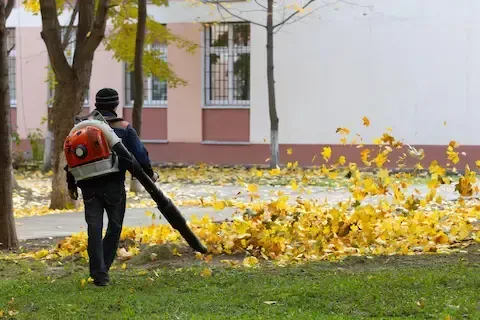
Sioux City's mature neighborhoods — from Morningside to the North End — are lined with large hardwood trees that drop substantial leaf volume every fall. Allowing leaves to mat on turf blocks sunlight, traps moisture, and creates the perfect environment for snow mold and other fungal issues. Mulching dry leaves with a mower works well for light coverage, but dense leaf accumulation needs to be collected and removed.
Make leaf removal a recurring task through October and into November rather than a single end-of-season project. This is where a professional Fall Cleanup service earns its value — keeping up with leaf drop on a schedule rather than letting it accumulate into a problem. Clearing debris also exposes any areas where turf thinning, disease, or pest damage occurred during the growing season, giving you accurate information going into next spring.
Equipment and Irrigation Winterization
Before temperatures drop below freezing, blow out irrigation lines and shut down any in-ground sprinkler systems. Standing water in irrigation lines will expand when frozen and crack fittings or manifolds — a repair that can cost several hundred dollars and delay spring startup. In Sioux City, the first killing frost typically arrives between October 1 and October 15, though some years push earlier and others later. Schedule your blowout before that window arrives rather than reacting to a forecast.
Store spreaders, mowers, and other lawn equipment clean and dry. Remove fuel from small engines or add a stabilizer if the equipment will sit for more than 30 days. A quick blade sharpening before storage means your mower is ready for a clean first cut next spring instead of tearing through new growth with a dull edge.
Putting It All Together Before First Freeze
Pre-winter lawn prep in Sioux City isn't a single task — it's a sequence that unfolds over six to eight weeks in fall. Aerate and overseed in early-to-mid September. Fertilize in late September to mid-October. Manage leaves on a rolling basis through November. Take your final mow at the right height. Check drainage and winterize irrigation before the ground freezes.
If you're working through your schedule and want a broader framework for coordinating everything, the Fall Cleanup Roadmap for Homeowners walks through the full seasonal process from late summer through freeze-up. Getting these steps right doesn't require a perfect lawn going into fall — it just requires starting early enough to complete each task in the right order before winter closes the window.
