Sidewalk Snow Ordinance Compliance in Sioux City IA
If you own property in Sioux City, Iowa, keeping your sidewalk clear after a snowstorm is not just a matter of good manners — it is a legal obligation. The city enforces a sidewalk snow ordinance that sets specific deadlines and standards for residential and commercial property owners alike. Understanding what the ordinance requires, what happens when you miss the deadline, and how to stay on the right side of city inspectors can save you money, stress, and potential liability. Whether you have lived in Sioux City for decades or recently purchased a home near the Missouri River corridor, this guide covers what you need to know.
What the Sioux City Sidewalk Snow Ordinance Requires
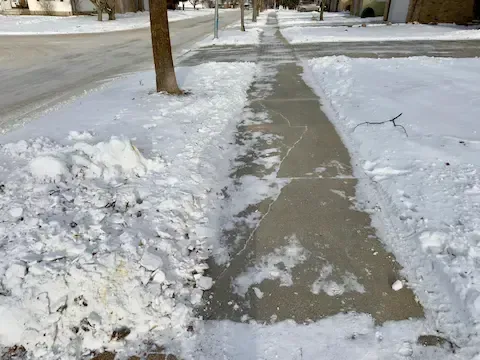
Sioux City's sidewalk snow removal ordinance places the responsibility squarely on the property owner or occupant. After a snowfall ends, you are expected to clear the adjacent sidewalk within a defined window — typically within 24 hours of snowfall ceasing. The cleared path must be wide enough for safe pedestrian passage, and simply creating a narrow foot trail down the center of the walk does not satisfy the ordinance. The city expects a full, clear path free of snow and ice.
Ice accumulation is treated with the same seriousness as snow. If freezing rain or melt-and-refreeze conditions create an icy surface, property owners are responsible for treating or removing that ice as well. Scattering sand or salt to improve traction is acceptable, but the city does not consider a salted-but-still-icy sidewalk as fully compliant if the ice layer remains hazardous.
The ordinance applies to all sidewalks abutting your property, including corner lots, which carry an additional obligation along both street frontages. If you own a corner property anywhere in Sioux City — from the neighborhoods near Leeds to those near Downtown — you are responsible for both sections, which can represent a significant amount of linear footage after a heavy storm.
Deadlines and Enforcement Windows
Timing matters more than most homeowners realize. The 24-hour clock starts when snowfall officially ends, not when you wake up and notice the accumulation. During a storm that drops snow overnight, your window may already be running by early morning. City inspectors typically begin enforcement sweeps after the post-storm deadline has passed, and they document violations by address.
Sioux City winters are no mild affair. The area routinely receives multiple snow events between November and March, and some years bring back-to-back storms that test even diligent property owners. When a second storm follows within the compliance window of the first, property owners should treat the combined accumulation under the new storm's deadline. However, if the first storm already triggered a violation notice, that notice does not reset because additional snow fell.
The city's public works department is responsible for enforcement, and complaints from neighbors or pedestrians can also trigger inspections. A single complaint about an icy sidewalk near McKinley Elementary or along a school walking route can move a property to the top of the inspection list faster than routine sweeps would.
Fines and City Remediation Costs
Failing to comply with Sioux City's sidewalk snow ordinance carries financial consequences. The city can issue a fine for non-compliance, and if the property owner still does not act, the city may arrange for the sidewalk to be cleared by a city contractor. When that happens, the remediation cost is billed directly to the property owner — often at rates significantly higher than what a private snow removal service would charge — and unpaid bills can be assessed to your property taxes.
This is one of the most important details homeowners overlook. The fine alone may seem manageable, but the city contractor fee stacked on top of it, combined with the potential for a tax lien, makes non-compliance genuinely expensive. Repeat violations within a season can escalate both the fine amount and the speed at which the city moves to remediate.
Property owners who rent their homes should also understand that the ordinance liability typically falls on the property owner, not the tenant, unless the lease specifically transfers that responsibility. Relying on a tenant to handle snow removal without a clear written agreement and consistent follow-up is a risk that has resulted in fines for many Sioux City landlords.
What Qualifies as a Cleared Sidewalk
The city does not provide a precise measurement in inches for path width in every published document, but the practical standard is a full-width clear path. That means removing snow from curb edge to property line edge of the walk — not just a narrow strip. If your sidewalk is five feet wide, inspectors expect five feet of accessible, passable surface.
Where you move the snow also matters. You cannot legally push snow from your sidewalk into the street. Sioux City prohibits depositing cleared snow into the roadway because it creates hazards for drivers and can block storm drains. Snow must be moved onto your property — typically the lawn strip between the sidewalk and curb, or your yard — and not into the street or across property lines onto your neighbor's walk.
Practical Strategies for Staying Compliant
The most effective approach to ordinance compliance is preparation before the season starts. Investing in proper equipment — a sturdy snow blower or ergonomic snow shovel — and keeping ice melt stocked before the first storm arrives puts you in a position to respond quickly after snowfall ends. Waiting until the storm hits to find your equipment or pick up supplies at a store that may be sold out is a pattern that leads to violations.
For homeowners who travel for work, manage multiple properties, or have physical limitations that make shoveling difficult, Sidewalk Snow Clearing services provide a reliable alternative. Professional snow crews work on post-storm schedules designed specifically to meet city compliance windows, which means they are out clearing sidewalks while the deadline clock is still running — not after it has expired.
Scheduling service in advance of the season, rather than calling after a storm has already dropped six inches, gives you a confirmed spot in a crew's route. Seasonal contracts are particularly valuable during years when Sioux City experiences frequent back-to-back storms, because crews prioritize contracted clients over one-off calls during peak demand periods.
If you want to understand what professional clearing involves before committing to a service contract, reviewing what local crews cover — including the clearing standards they follow — is a useful starting point. The guide on Sidewalk Snow Clearing in Residential areas walks through the specifics of what a professional service handles and what property owners can expect during a typical Sioux City winter season.
Liability Beyond the Fine
Beyond the city ordinance itself, there is personal liability to consider. If a pedestrian slips and falls on an icy sidewalk in front of your Sioux City property, you may face a civil claim in addition to any city fine. Iowa courts have addressed premises liability cases involving icy sidewalks, and the fact that you received a city violation notice — essentially documented evidence that the walk was non-compliant — can complicate your defense significantly.
Staying compliant is not just about avoiding a municipal fine. It is about protecting yourself from a much larger financial exposure that a single slip-and-fall lawsuit can create. Treating sidewalk snow removal as a routine winter maintenance task, rather than an optional one, is the approach that protects both your neighbors and your financial interests throughout the season.
