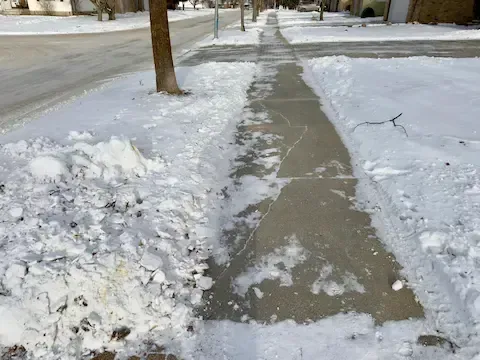
When Must Sioux City Sidewalks Be Cleared After Snow
Sioux City sidewalks must be cleared of snow and ice within 24 hours after snowfall stops. This deadline applies to property owners and occupants responsible for the adjacent sidewalk. If snow falls overnight, the clock starts when precipitation ends — not when the sun rises. Failing to clear your walk within that window can result in a city-issued warning or fine, and in some cases the city may hire contractors to do the work and bill you for the cost. Understanding the ordinance helps you avoid unnecessary penalties and keeps your neighbors and postal carriers safe on Sioux City streets.
What Is the Exact Deadline for Clearing Sidewalks in Sioux City?
The Sioux City Municipal Code requires sidewalks to be cleared within 24 hours after a snowfall event ends. The measurement window begins when precipitation stops, not when the storm starts. If a snowstorm ends at 6 p.m. on a Tuesday, property owners have until 6 p.m. Wednesday to clear the full width of the adjacent sidewalk. This rule applies to residential and commercial properties throughout Sioux City and the surrounding Woodbury County area. Partial clearing — such as a narrow foot-path down the center — is not considered compliant. The full usable width of the sidewalk must be accessible.
Who Is Responsible for Clearing the Sidewalk?
Responsibility falls on the property owner or the current occupant of any building adjacent to a public sidewalk. If you rent your home, your lease agreement may place the duty on you as the tenant — but the city typically holds the property owner accountable for code violations. Landlords in neighborhoods like Leeds, Morningside, and the Historic District should confirm their lease language is clear and that their tenants understand the 24-hour window. If neither owner nor tenant acts in time, the city may arrange removal and send the cost back to the property owner as a special assessment on their tax bill.
What Happens If You Miss the Deadline?
Missing the clearing deadline triggers a process that starts with a city notice or violation. Inspectors or complaint-based enforcement will identify the uncleaned walk, and the owner is given a short opportunity to comply. If the sidewalk remains uncleared, the city contracts the work out and the property owner is billed. Costs for city-contracted snow removal are not fixed — they depend on the contractor's rate and the scope of the job. Repeat violations can also lead to direct fines. In high-traffic areas near downtown Sioux City or along bus routes, enforcement tends to be more active because pedestrian safety is a higher priority.
Does Ice Count the Same as Snow?
Yes. The Sioux City sidewalk ordinance covers both snow and ice. If a snow event is followed by freezing temperatures that create an icy surface, property owners are still required to make the sidewalk reasonably safe. This often means applying sand, salt, or ice melt when full removal is not possible. Simply shoveling dry snow down to a slick ice layer does not satisfy the ordinance. In winters common to northwest Iowa — where temperatures frequently drop well below freezing — ice management is often more challenging and more important than the initial snow clearing. Having the right materials on hand before a storm hits makes a real difference.
Are There Any Exemptions to the Rule?
There are limited situations where the standard deadline may not apply as strictly. Properties actively under construction with a posted permit may have different requirements. Elderly or disabled homeowners in certain programs may qualify for assistance through city programs or community volunteer organizations. However, these exemptions are narrow and property owners should not assume they apply without confirming with the city. If you are physically unable to handle snow removal, arranging Sidewalk Snow Clearing service before winter arrives is the most reliable way to stay compliant without risking fines or liability.
How Does the Deadline Change During a Multi-Day Storm?
When snowfall is continuous or broken up by brief pauses, the 24-hour clock does not restart with each new accumulation — it resets based on when precipitation truly ends. This is an important distinction. During a two-day storm common in Sioux City winters, you are not expected to clear a sidewalk that will be immediately covered again. But once conditions stabilize and snow stops falling, the deadline begins. Monitoring local forecasts through channels like the National Weather Service Davenport office (which covers western Iowa) helps you plan your clearing schedule accurately. Do not assume the storm is over until you have confirmed it.
What Is the Best Way to Stay Compliant Every Winter?
The most practical approach is to treat sidewalk clearing as a scheduled task the moment a storm ends. Keep a quality snow shovel and a supply of ice melt stocked before the first snowfall of the season. Set a reminder tied to the end of each weather event so you are not caught off guard by the deadline. If travel, work schedules, or physical limitations make timely clearing unreliable, a seasonal snow removal contract removes that uncertainty entirely. For more detail on how the ordinance is written and enforced locally, review our guide on Sidewalk Snow Ordinance Compliance in Sioux City, which covers the full code language and enforcement process.
